


Sulfurizing Agent
For a long time, the presence of sulfur in gray iron liquid has been regarded as a harmful element by industry professionals. Some even consider it the natural enemy of producing high-quality castings. In fact, the presence of sulfur in gray iron liquid has its duality and should be viewed from a two-sided perspective.
Given the quality requirements of nodular cast iron and steelmaking production, pig iron producers are increasingly reducing the sulfur content in pig iron. Usually, it is below 0.04%, and the sulfur content in quite a lot of pig iron is even lower than 0.025%. This is certainly a good thing. However, from the perspective of gray cast iron production, the situation is different. It is necessary and beneficial for gray iron liquid to contain an appropriate amount of sulfur.
Some research and experimental results show that when the sulfur content in gray cast iron is 0.06% - 0.10%, it is beneficial for improving the machinability of castings, enhancing the inoculation effect during the production process, and improving the graphite morphology, which can improve the mechanical properties of castings. To obtain high-quality gray castings, a reasonable balance of sulfur content in the molten iron should be maintained. If the sulfur content is not at an appropriate level, sulfur addition treatment needs to be carried out in a timely manner.

the sulfur content
20 - 30%
Pyrite (FeS₂)
the sulfur content
40 - 50%
Iron sulfide (FeS)
the sulfur content
99%
Sulphur powder (S)
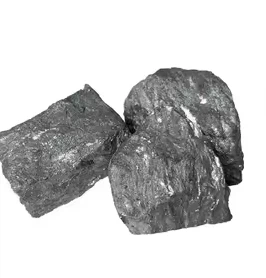
Sulfurizing Agent Definition
A sulfurizing agent is an additive used to increase the sulfur content in metal materials (mainly steel, casting alloys, etc.). In some specific metal processing and casting processes, it is necessary to precisely control the sulfur content to improve certain properties of the metal, and the sulfurizing agent plays an important role.

Common Types and Compositions
Sulfur Powder:The main component is sulfur (S), and the purity is usually over 99%.
- Characteristics: Sulfur powder is one of the most common sulfurizing agents. It is relatively inexpensive and widely available. It has fine particles and can easily disperse in the molten metal, quickly increasing the sulfur content. However, sulfur powder is prone to volatilization at high temperatures. Therefore, attention should be paid to the addition method and time to ensure its effective utilization.
Iron Sulfide: The main component is iron sulfide (FeS), and its purity varies according to different production processes and product specifications.
- Characteristics: Iron sulfide has a relatively high sulfur content and is stable in the molten metal, not easy to volatilize. It can slowly decompose at high temperatures, releasing sulfur elements, enabling sulfur to uniformly integrate into the molten metal. The sulfur-increasing effect is relatively long-lasting. It is commonly used in steel smelting and casting processes and can effectively improve the machinability of metals.
Sulfur-containing Ore: It contains a certain amount of sulfides, such as pyrite (FeS₂), etc. The sulfur content and impurity components of different sulfur-containing ores vary.
- Characteristics: Sulfur-containing ore is a relatively low-cost sulfurizing agent. However, due to its relatively high impurity content, it may have a certain impact on the quality of the metal. Pretreatment of the ore is required before use to remove impurities and ensure the sulfur-increasing effect and metal quality.
Principle of Action
The main function of the sulfurizing agent is to change the structure and properties of the metal by adding sulfur elements to the molten metal. In steel, an appropriate amount of sulfur can form iron sulfide with iron, which is distributed at the grain boundaries, reducing the plasticity and toughness of the metal. Thus, it improves the machinability of steel, making the cutting process smoother and reducing tool wear. In some casting alloys, the addition of sulfur can affect the solidification process of the alloy, change the size and shape of the grains, and improve certain properties of the casting, such as improving the surface quality and increasing fluidity.
Applications
Steel Industry
- In the production of machinery manufacturing steel, in order to improve the machinability of steel, it is often necessary to add a sulfurizing agent to adjust the sulfur content. For example, the sulfur content in free-cutting steel is generally controlled between 0.08% - 0.3%. By adding a sulfurizing agent, the sulfur content can be precisely controlled to meet the requirements of different processing technologies.
- In the smelting process of some special steel grades, the sulfurizing agent can also be used to improve certain properties of the steel, such as enhancing corrosion resistance and improving hot working performance.
Casting Industry
- In the casting process of gray cast iron and ductile iron, an appropriate amount of sulfur helps to promote graphitization, improve the morphology and distribution of graphite, and enhance the quality and performance of the casting. At the same time, sulfur can also increase the fluidity of the molten iron, which is beneficial to the molding of the casting.
- In the casting of some non-ferrous metals, such as copper alloys and aluminum alloys, the sulfurizing agent can also be used to adjust the properties of the alloy to meet specific usage requirements.

Selection and Usage Precautions
- Select the Appropriate Sulfurizing Agent According to Process Requirements: Different metal materials and processing technologies have different requirements for sulfur content. The appropriate sulfurizing agent should be selected according to specific conditions. For example, for processes that require precise control of sulfur content and strict requirements for impurities, high-purity and stable sulfurizing agents such as sulfur powder or high-purity iron sulfide should be selected; for some processes that are more sensitive to cost and have relatively lower requirements for impurities, sulfur-containing ore can be considered.
- Control the Dosage of the Sulfurizing Agent: The dosage of the sulfurizing agent should be accurately calculated based on factors such as the type of metal material, the initial sulfur content, and the target sulfur content. If the dosage is too small, the expected sulfur-increasing effect cannot be achieved; if the dosage is too large, it may lead to deterioration of metal properties, such as reduced toughness and hot brittleness.
- Pay Attention to the Addition Method and Time: In order to ensure the uniform dispersion of the sulfurizing agent in the molten metal and give full play to its role, it is necessary to select the appropriate addition method and time. Generally, add the sulfurizing agent when the molten metal is well-stirred and appropriately extend the stirring time, which is helpful for the full dissolution and dispersion of the sulfurizing agent. For sulfurizing agents that are easy to volatilize, such as sulfur powder, they should be added at an appropriate temperature to avoid a large amount of sulfur volatilization due to premature addition.
- Storage and Transportation: The sulfurizing agent should be stored in a dry and well-ventilated warehouse to avoid moisture and rain. Flammable sulfurizing agents such as sulfur powder should pay attention to fire and explosion prevention during storage and transportation, and keep away from fire sources and heat sources. At the same time, prevent the sulfurizing agent from being mixed with other chemical substances to avoid chemical reactions that may affect its performance.
Packing and Shipping
Water-Proof Plastic woven bag, 1000kg per bag or as your requirements.


Frequently Asked Questions
Q: Does the product accept customized service? What specific aspects can be customized?
Q: Are samples provided free of charge?
Q: How many years of production experience do you have?
Q: Whether quality inspection can be performed?
Q: Is it possible to deliver quickly?
Q: What is the minimum order quantity?
Q: Are customers online 24 hours a day to answer questions?
Q: What are the after-sales services?
Hot Tags: sulfurizing agent, China sulfurizing agent manufacturers, suppliers
Previous
Magnesium-Based NodulizerNext
InoculantsYou Might Also Like


Send Inquiry